
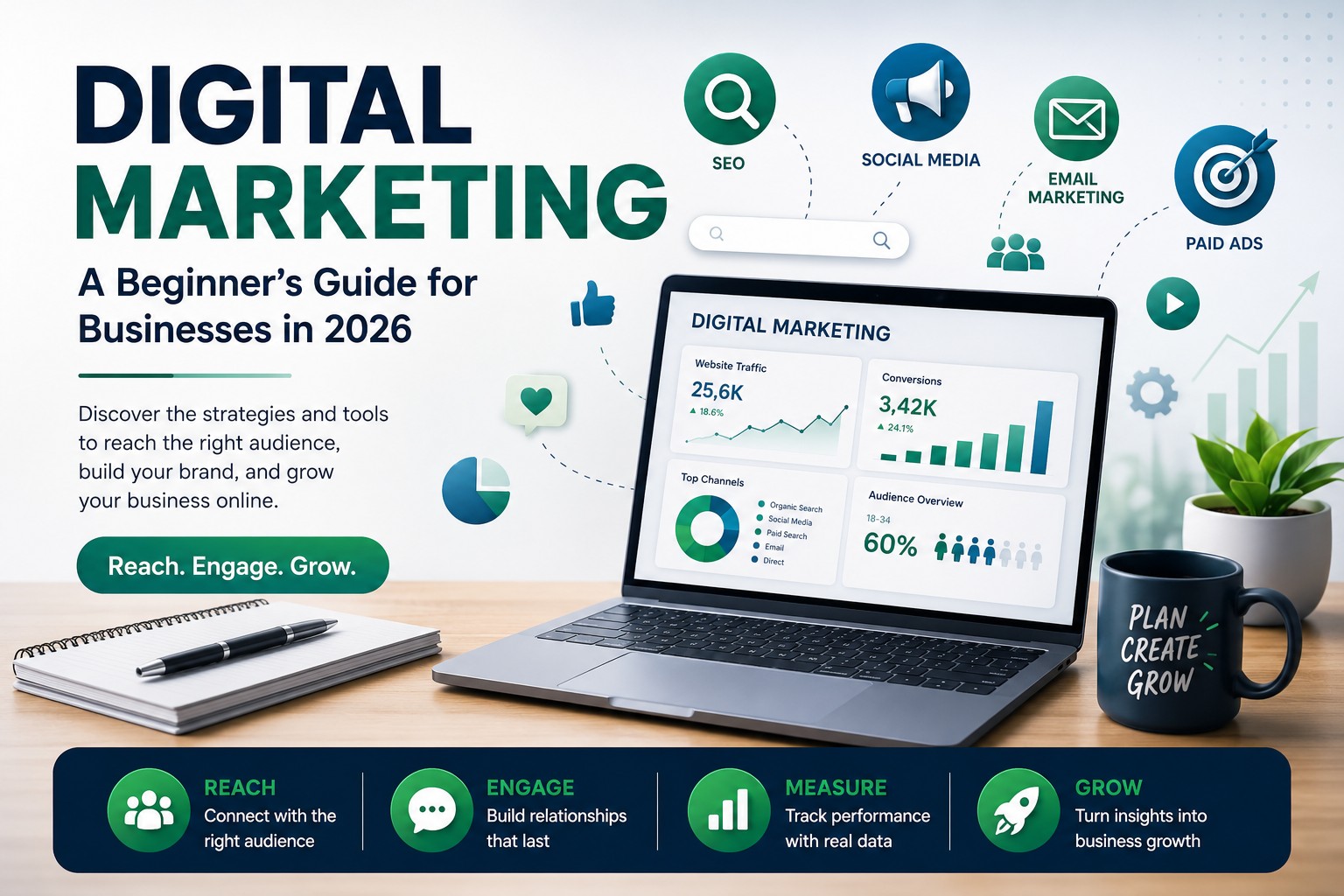
Digital marketing has become one of the most important ways businesses connect with customers today. Whether someone finds a brand through Google search, sees a product on social media, or receives a promotional email, digital marketing often plays a role in that journey. As more people spend time online every day, businesses need stronger digital visibility to stay competitive and reach the right audience.
For beginners, digital marketing can feel overwhelming because there are many strategies and platforms available. Terms like SEO, social media marketing, paid ads, and email campaigns can sound technical at first. But digital marketing does not need to be complicated. At its core, it is simply about helping people discover your business online and giving them a reason to trust what you offer.
Digital marketing is not only about getting attention online—it is about reaching the right audience and turning visibility into real business results.
What Is Digital Marketing?
Digital marketing refers to promoting products or services through online channels. These channels include websites, search engines, social media platforms, email newsletters, and paid advertisements. Unlike traditional marketing, digital marketing gives businesses more flexibility because results can be tracked more clearly and adjusted faster.
For example, a business running a campaign on social media can immediately see how many people viewed the content, clicked the link, or completed a purchase. That kind of visibility makes digital marketing easier to improve over time. Instead of guessing what works, businesses can use real data to guide their strategy.
Digital marketing also creates more opportunities for businesses of different sizes. A local café can attract nearby customers through Instagram and Google Maps, while a consultant can publish articles to reach potential clients through search engines. The strategy may look different, but the goal stays the same: build visibility and create meaningful customer engagement.
Why Digital Marketing Matters in 2026
Customer behavior has changed significantly over the past few years. Before buying a product or contacting a business, many people search online first. They read reviews, compare options, check websites, and often spend time researching before making a decision.
Because of that, businesses need to be visible earlier in the buying process. If someone needs a service but cannot find your business online, they will likely move on to another option. Digital marketing helps solve that problem by creating visibility where customers already spend their time.
Some of the biggest benefits include:
- Reaching more potential customers
- Building stronger brand awareness
- Generating leads online
- Tracking performance more clearly
- Improving customer engagement
- Supporting long-term business growth
Even simple digital marketing efforts can create meaningful results when done consistently.
The Main Types of Digital Marketing
Digital marketing includes multiple channels, and each one supports different goals. Some help businesses get discovered, while others help build trust or improve conversions.
Here is a simple overview:
| Channel | Main Goal |
|---|---|
| SEO | Improve search visibility |
| Content Marketing | Educate and build trust |
| Social Media | Increase awareness and engagement |
| Paid Advertising | Reach customers faster |
| Email Marketing | Build relationships and retention |
Most businesses do not need every channel at once. The right mix depends on the audience, business type, and overall goals.
Search Engine Optimization (SEO)
Search engine optimization, or SEO, helps businesses appear in search results when customers look for something online. When someone types a keyword into Google, SEO helps improve the chances of your website being found.
For example, someone searching for “best dashboard tools for business reporting” may discover a company because its website ranks well. That visibility can create consistent website traffic without relying only on advertising.
SEO usually includes:
- Keyword research
- Writing helpful content
- Improving website speed
- Organizing website pages clearly
- Building credibility over time
A strong SEO strategy often takes time, but the long-term value can be significant.
Real-world example
A local accounting business publishes articles about budgeting and tax planning every month. After several months, those articles begin ranking in Google search. Website traffic grows steadily, and new leads start coming through organic search.
That is one reason SEO is often seen as a long-term investment.
Content Marketing
Content marketing focuses on creating useful information for your audience. This can include blog posts, guides, videos, infographics, or email newsletters.
The goal is not only promotion. Good content helps people solve problems or understand something more clearly. That creates trust and positions the business as a helpful source.
For example, a data analyst may publish articles explaining dashboards, reporting workflows, or business insights. Someone searching for those topics may discover the website, learn something valuable, and begin trusting that expertise.
People often remember businesses that teach them something useful before asking for anything in return.
Over time, content marketing also supports SEO and strengthens brand authority.
Social Media Marketing
Social media gives businesses a direct way to connect with customers. Platforms like Instagram, LinkedIn, Facebook, and TikTok each support different audiences and communication styles.
A visually focused business may benefit from Instagram. A consultant or B2B service provider may find more opportunities through LinkedIn.
A small café, for example, might post:
- New menu launches
- Customer reviews
- Weekend promotions
- Behind-the-scenes content
These posts help keep customers engaged while attracting new visitors.
Social media also builds stronger brand personality because communication feels more direct and interactive.
Paid Advertising
Paid ads help businesses reach customers more quickly. Platforms like Google Ads, Facebook Ads, and Instagram Ads allow businesses to target specific audiences.
This targeting can be based on:
- Location
- Interests
- Search behavior
- Website activity
For example, an online store selling running shoes may run ads targeting users interested in fitness. The result is faster visibility and more targeted traffic.
Paid advertising often works best when paired with strong landing pages and clear messaging.
Email Marketing
Email marketing remains one of the most effective digital marketing channels. It gives businesses a direct way to stay connected with customers and build long-term relationships.
A business may use email for:
- Welcome messages
- Product promotions
- Helpful updates
- Educational newsletters
- Follow-up communication
For example, someone downloads a free guide from a website. After that, the business sends helpful resources and relevant recommendations over time.
This keeps communication consistent without being too aggressive.
Why Data Matters in Digital Marketing
One of the strongest advantages of digital marketing is that results can be measured clearly.
Businesses can track:
- Website traffic
- Click-through rates
- Leads
- Conversion rates
- Sales performance
- Customer engagement
This helps answer practical questions.
Which campaign generated the most leads? Which content performed best? Which channel created stronger conversions?
With clear data, marketing decisions become more strategic and easier to improve.
Common Beginner Mistakes
Many businesses start digital marketing with strong motivation but no clear structure. That usually leads to frustration.
Some common mistakes include:
- Trying too many platforms at once
- Posting inconsistently
- Ignoring SEO
- Running ads without tracking performance
- Focusing only on followers instead of business goals
A better approach is keeping things simple and consistent.
One or two channels done well often perform better than trying everything at once.
How to Get Started
A beginner-friendly digital marketing strategy can start with a few practical steps.
First, define your goal. That may be more website traffic, more leads, or stronger brand visibility.
Second, understand your audience. Know what they need and where they spend time online.
Third, choose one or two channels that match your business.
Then measure results and improve gradually.
A simple strategy built consistently usually creates stronger long-term growth than trying to do everything immediately.
Final Thoughts
Digital marketing helps businesses connect with customers online through search engines, content, social media, email, and paid advertising. It creates more visibility, improves customer engagement, and gives businesses measurable insights that support better decisions.
For beginners, the most effective approach is starting simple. Focus on understanding the audience, choosing the right channels, and creating consistent value.
Over time, digital marketing becomes more than promotion. It becomes a practical system that helps businesses build trust, attract customers, and grow in a competitive online environment.
Need Help Tracking Your Digital Marketing Performance?
If you’re running campaigns and want clearer reporting, dashboards, or better data-driven insights, I’d be happy to help.
Visit kenchristn.com to explore my portfolio and recent projects in data analysis, dashboards, and AI automation.
You can reach out for help with:
- Marketing performance dashboards
- KPI tracking and reporting
- SQL analysis
- Data visualization
- Campaign performance insights
- Turning marketing data into actionable decisions
Let’s turn your digital marketing data into smarter decisions and measurable business growth.